
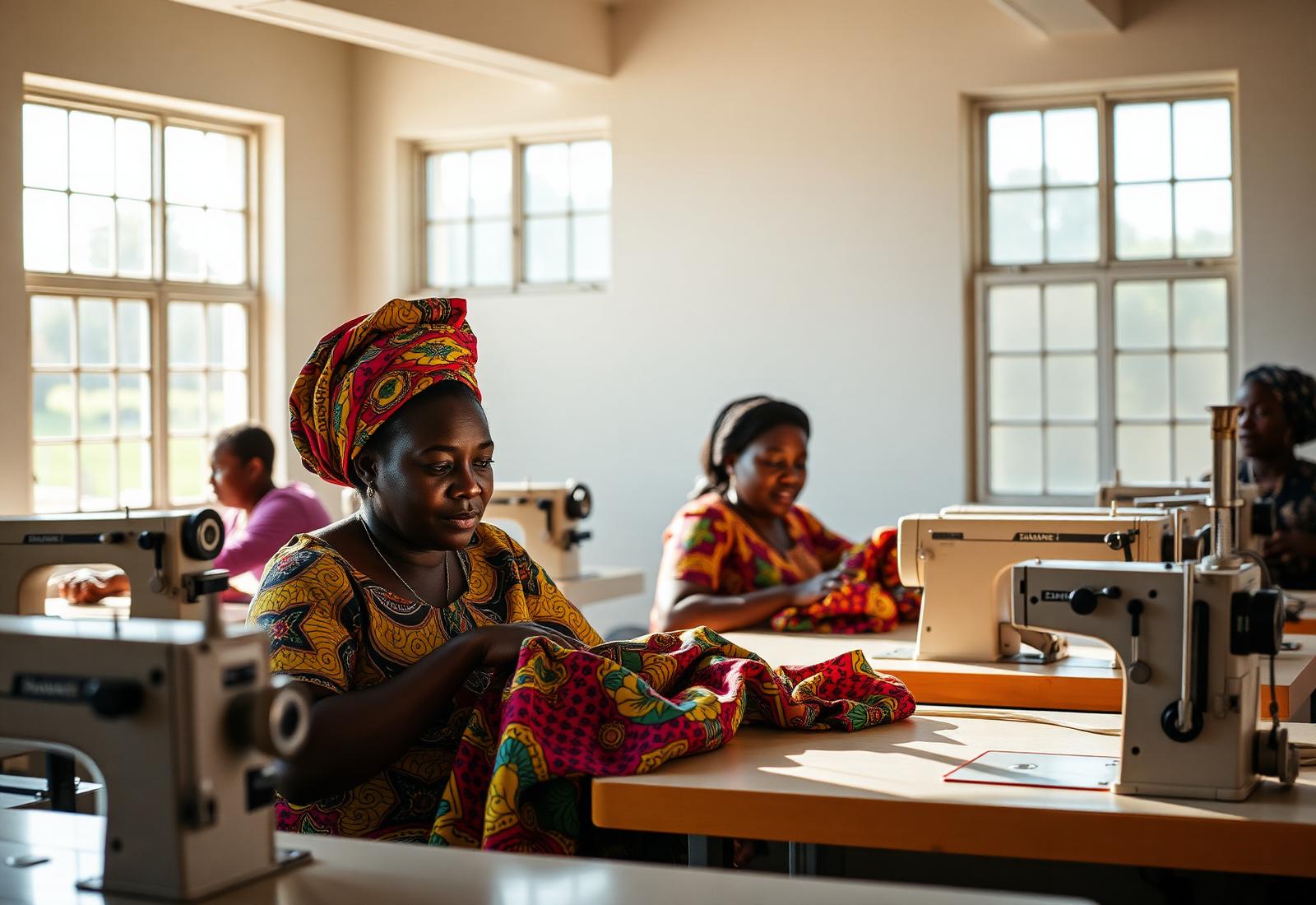
Tailoring and Fashion: the skill she brought with her.
For many of the women who walk through our doors, newcomers, refugees, and mothers rebuilding after migration, a sewing machine is not a new skill. It is the one they brought from home. We help them use it here.
A skill from back home, put to work here.
Most of the women we serve arrive in Canada carrying more than luggage. They carry a trade, often one they have practised since girlhood. Sewing. Tailoring. Beadwork. The knowledge of how to turn a bolt of fabric into something a family will wear on a wedding day.
Then the credentials do not transfer. The certifications do not count. The résumé gap grows. And a woman who ran a workshop in Lagos, Kingston, or Nairobi finds herself invisible in a new economy that never asked what she could do.
GWOW's Tailoring and Fashion program was built for that woman. We give her a machine, a workspace, a curriculum in the local market, and a community. Then we help her turn a skill that already lives in her hands into income, entrepreneurship, and dignity.
One trade. Six changes at home.
Income
A trade that pays from the first alteration. No waiting years for credentials.
Entrepreneurship
The starting point of a home-based or shopfront business, owned by her.
Mental Health
Focused, tactile work that steadies anxiety and restores identity after displacement.
Family
Flexible hours that fit school runs, prayer, and caregiving. Work that bends around home.
Belonging
A workshop community where accents, head wraps, and stories are the norm, not the exception.
Legacy
Skill passed to daughters and neighbours. A quiet economy of women teaching women.
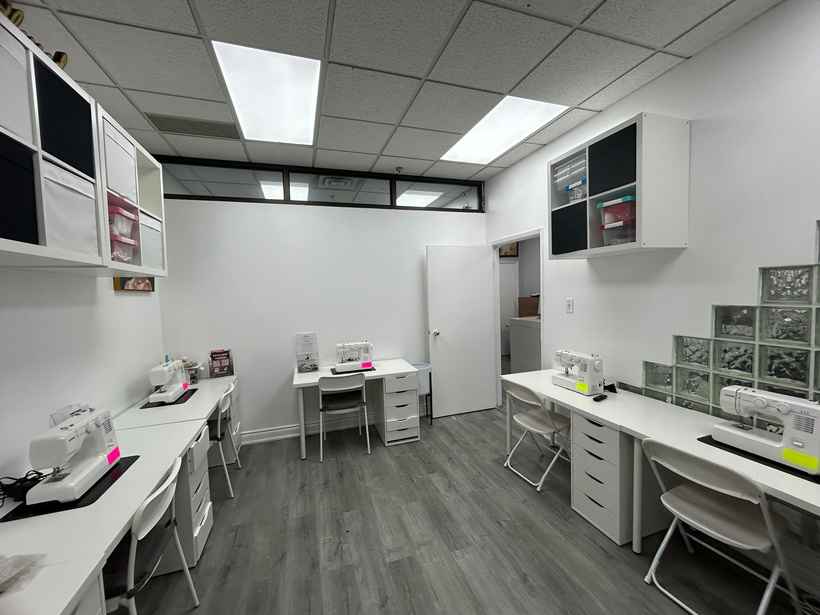
A real room. Real machines.
This is where the training happens. Not a picture of a workshop, the workshop itself: machines threaded and waiting, chairs pulled up to the tables, and a place set aside for every woman who comes in to work.
Six sewing stations
Each with its own machine, chair, and colour tag, so every student has a fixed place to return to week after week.
Cutting and pressing space
Long tables for laying out fabric, plus irons and pressing tools for finishing work properly.
Learning corner
A whiteboard and a large screen for lessons, pattern demos, and business talks.
Beadwork and jewellery table
A big shared table with materials for the craft and jewellery sessions.
Accessible washroom
A sink, toilet, and accessibility features, so mothers with little ones and older women can stay comfortably.
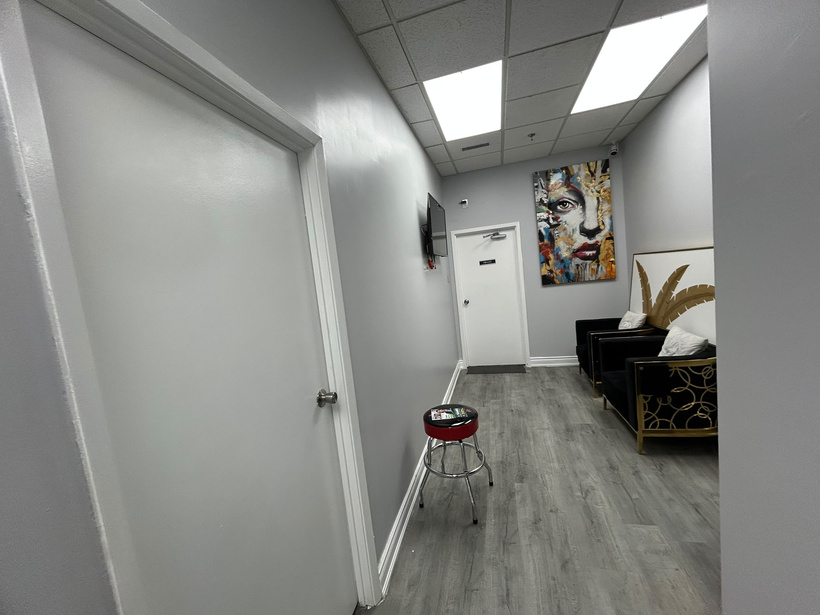
The room is being renovated into the GWOW Creative Art Hub: a practical studio, a learning area, a beadwork and jewellery table, and an accessible washroom. The photos above are the space as it is now.
A working curriculum, not a hobby class.
We teach what pays. Every module is built around a real income stream a student can charge for within her first months at the machine.
Foundations of Sewing
Machine operation, thread work, stitch families, seam finishing, and workshop safety.
Pattern Drafting
Measuring, block patterns, grading, and cutting for real bodies, not just standard sizes.
African and Western Silhouettes
Ankara, kaftan, boubou, and contemporary Western tailoring. We honour where students come from and where they now live.
Alterations and Repair
The bread and butter service that turns a home machine into a first paycheque within weeks.
Costing and Pricing
How to quote a job, cost fabric and labour, and protect margin without underselling your craft.
Client Communication
Consultation etiquette, fittings, and building a small book of repeat customers.
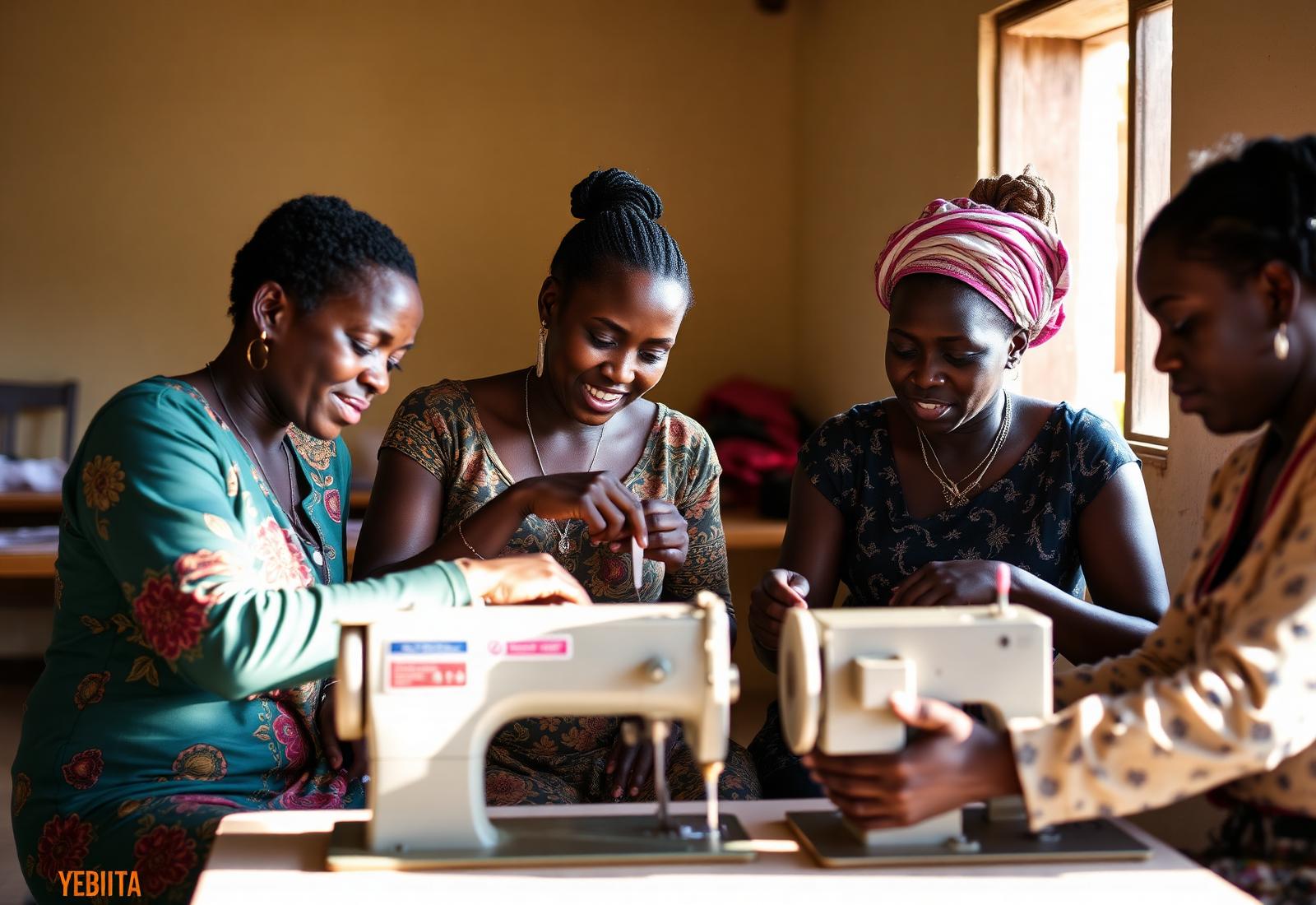
We do not treat our students as beginners because they are new to Canada. Many of them are teaching us. The curriculum is a scaffolding for what they already know, not a substitute for it.
Book the machines. Training is free.
Clients and program participants can book a session to use our sewing machines, sergers, cutting tables, and studio space at a very low cost, so a lack of equipment never stands between a woman and her work.
Low Cost Studio Time
Reserve a machine and workspace by the session at a rate set for our community, a fraction of commercial studio rental.
Free Training
Every training session in the studio is free. You pay nothing to learn; the small booking fee only covers machine time and materials wear.
Who Can Book
Current students, program graduates, and referred clients, anyone building a garment, a business, or a skill.
What's Included
Domestic and industrial machines, sergers, irons, dress forms, cutting space, and a supervisor on hand for questions.
Every Thursday, the studio door is open to all.
A weekly drop in at our fashion and art studios for new mothers, senior women, and youth. No enrollment, no cost, no experience needed. Come as you are; leave with something you made.
Who It's For
New mothers with little ones, senior women looking for company, and youth exploring a creative skill, all at the same tables.
What You Can Do
Beading, jewelry making, craft, painting, and simple sewing projects, with materials and gentle guidance provided.
Why It Matters
Isolation is one of the heaviest burdens our community carries. A shared table, busy hands, and unhurried conversation ease it, week after week.
How It Works
Drop in any Thursday during studio hours. Stay for twenty minutes or the whole afternoon. Tea is on; the machines are warm.
Many women first find GWOW at an Open Studio Thursday, and only later join a class, a program, or a prayer circle. The open door is the point.
From first stitch to first customer.
Intake
A conversation. What she already knows, what she needs, and what stands in the way.
Training
Weekly workshop sessions in a shared studio with shared machines and shared meals.
Certification
A completion credential and a portfolio of finished garments to show clients.
Launch
Startup support: a first machine, first fabric, a small business plan, and referrals.
Enroll, refer, or donate a machine.
We accept new students on a rolling basis and gratefully receive donated sewing machines, sergers, dress forms, and quality fabric.